

How Did the Early Church Flourish in a Hostile World?
 Christians sometimes talk as though cultural marginalisation makes gospel growth almost impossible. The first Christians might have found that an odd idea.
They had no established church, no Christian schools, no historic buildings, no representation in the corridors of power, and certainly no sympathetic media. At various points they faced ridicule, official suspicion and persecution. Yet Christianity grew.
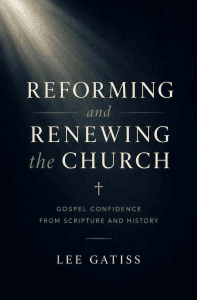
How? One chapter of my new book, Reforming and Renewing the Church, looks at how the early church flourished in a hostile world. Another asks why Christian mission depends upon maintaining the uniqueness of Christ. The two questions are closely connected.
1. They actually believed the gospel
This may sound obvious, but it is fundamental.
The early Christians didn’t flourish because they discovered a clever way to make Christianity more acceptable to the Roman world. They proclaimed something extraordinarily uncompromising: Jesus Christ is Lord.
Peter told the rulers of Israel that “salvation is found in no one else”, because there is no other name by which we must be saved. Paul said that one day every knee would bow and every tongue confess that Jesus Christ is Lord.
That is an uncomfortable message in a pluralistic society. It was uncomfortable then too.
The Roman world had plenty of religions. What it didn’t have much patience for was a religion which said that everybody else’s gods were false and that one particular crucified Jewish man was the Lord before whom everyone would eventually bow. Yet that conviction powered Christian mission.
If all roads lead to God, there is little urgency about evangelism. Christianity becomes one potentially helpful spiritual option among many. But if Jesus really is the way, the truth and the life, telling people about him is an act of love to which we feel compelled.
The early Christians believed they had good news which everybody needed to hear.
2. They lived as though the gospel was true
Their message was distinctive. So was their life together.
Christianity created communities in which people cared for one another in ways which could be striking in the ancient world.
One modern sociologist of early Christianity, Rodney Stark, has argued that Christian care during the great epidemics of the Roman Empire contributed to the church’s growth. Christians nursed one another. Their treatment of women and children also distinguished them from aspects of surrounding pagan culture. Christian communities helped make life in often unpleasant Greco-Roman cities more tolerable.
We shouldn’t reduce the growth of Christianity to sociology. The gospel isn’t a technique for constructing nicer communities. But the gospel does construct communities.
People who believe that they have been loved sacrificially by Christ ought to love one another sacrificially. A church which proclaims an extraordinary gospel but displays nothing extraordinary in its common life is contradicting its own message.
3. They were prepared to suffer
The early Christians also demonstrated that they believed their message by what they were prepared to endure for it.
Justin Martyr said that the courage of Christian martyrs had itself helped persuade him that Christianity deserved to be believed. Others noticed the same phenomenon. Christians who could have saved themselves by renouncing Christ preferred suffering and death.
We need to be careful here. Persecution in the Roman Empire wasn’t constant, universal or equally severe everywhere. The number actually martyred was relatively small.
But stories travelled. People noticed that these Christians possessed something they considered more valuable than comfort, social acceptance or even life itself.
That raises an uncomfortable question for us. What does the way we respond to hostility tell people about the value we place upon Christ?
If every setback sends us into panic, rage or despair, we may inadvertently suggest that our real confidence was in cultural influence and institutional security all along.
4. They didn’t confuse confidence with popularity
There is an important lesson here for Christians today. Confidence in Jesus does not depend on being liked, applauded, or culturally approved.
We should certainly make the best arguments we can. We should be courteous. We should love our neighbours. We should never belittle people of other faiths in order to make Christianity look better. But none of that requires us to be embarrassed by Jesus.
Christianity’s claim is not merely that Jesus has some helpful insights about God. It is that God has revealed himself definitively in his Son; that Christ died and rose for our salvation; and that he will return to judge the living and the dead.
Historic Anglicanism has been equally clear. Article 18 of the Thirty-nine Articles rejects the idea that people can obtain eternal salvation simply by following whatever religion they happen to profess. Scripture, it says, sets before us “only the Name of Jesus Christ, whereby men must be saved”.
That conviction is not an obstacle to mission. It’s what makes mission necessary, even when the message we preach is unpopular.
Hostility isn’t our greatest problem
The early church didn’t flourish because the surrounding culture agreed with it.
It flourished while proclaiming a message which challenged that culture, creating communities shaped by that message, and producing Christians who considered Christ worth suffering for.
That doesn’t give us a formula for church growth. Nor does it mean we should seek hostility, still less manufacture it through foolishness or unpleasantness.
But it should make us question one persistent assumption: that the gospel can flourish only when the cultural conditions are favourable.
It has flourished without them before.
Perhaps, then, the question isn’t simply “How hostile is our culture to Christianity?”
Perhaps we should also ask:
How deeply do we believe the gospel ourselves?
How clearly are we proclaiming the uniqueness of Christ?
How visibly is that gospel shaping the life of our churches?
And when following Christ becomes costly, does our response show that we really believe he is worth it?
The early Christians had considerably less cultural power than we do. But they knew who their Lord was. And they wanted everyone else to know him too.
These themes are explored more fully in chapters 4 and 15 of my new book, Reforming and Renewing the Church: Gospel Confidence from Scripture and History, published by Church Society.
Lee Gatiss is the Director of Church Society